


Imagine you're three hours into a five-hour holiday drive to see family. Your daughter asks, "Can I play Roblox on your laptop?" Not just any laptop — your work laptop, packed with client files, financial data, and key business information. You're tired from packing, still have several hours ahead, and honestly, keeping her occupied sounds like a lifesaver. But is it worth the risk?
Holiday travel introduces unique security risks you don't encounter in your daily routine. With distractions, fatigue, unfamiliar networks, and blurred lines between family time and quick work check-ins, your data can be vulnerable. Whether traveling for business, leisure, or a mix of both, here's how to safeguard your information while keeping the holidays joyful.
15-Minute Security Checklist Before You Hit the Road
Spend just 15 minutes prepping your devices to ensure a safer trip:
Device Essentials:
- Install all pending security updates immediately.
- Back up crucial files to a trusted cloud service.
- Set your device to auto-lock after no more than two minutes of inactivity.
- Enable "Find My Device" features on phones and laptops.
- Fully charge your portable power banks.
- Bring your own charging cables and adapters—don't rely on hotel or rental car outlets.
Set Family Boundaries:
- Clearly explain which devices are safe for kids to use and which are off-limits.
- Provide a shared tablet or second device for entertainment on the go.
- Create separate user accounts on work devices if children must use them.
Pro tip: If your kids need screen time during travel, consider bringing a tablet NOT linked to any work accounts. Spending $150 on an iPad can save you from a costly data breach.
Hotel WiFi Risks: How to Connect Safely
As soon as your family checks into the hotel, everyone connects their devices — phones, laptops, game consoles — to WiFi. Your teen streams shows, your partner checks emails, and you try to finalize a work proposal.
The issue: hotel WiFi is a public network loaded with potential threats, as countless guests share it, and not all are trustworthy.
Real example: A family connected to what they thought was a hotel network. It was a fake hotspot set up by someone nearby, capturing all their transmissions — passwords, payment info, emails — for two whole days.
How to protect yourself:
Confirm the network name by asking the hotel front desk; never guess.
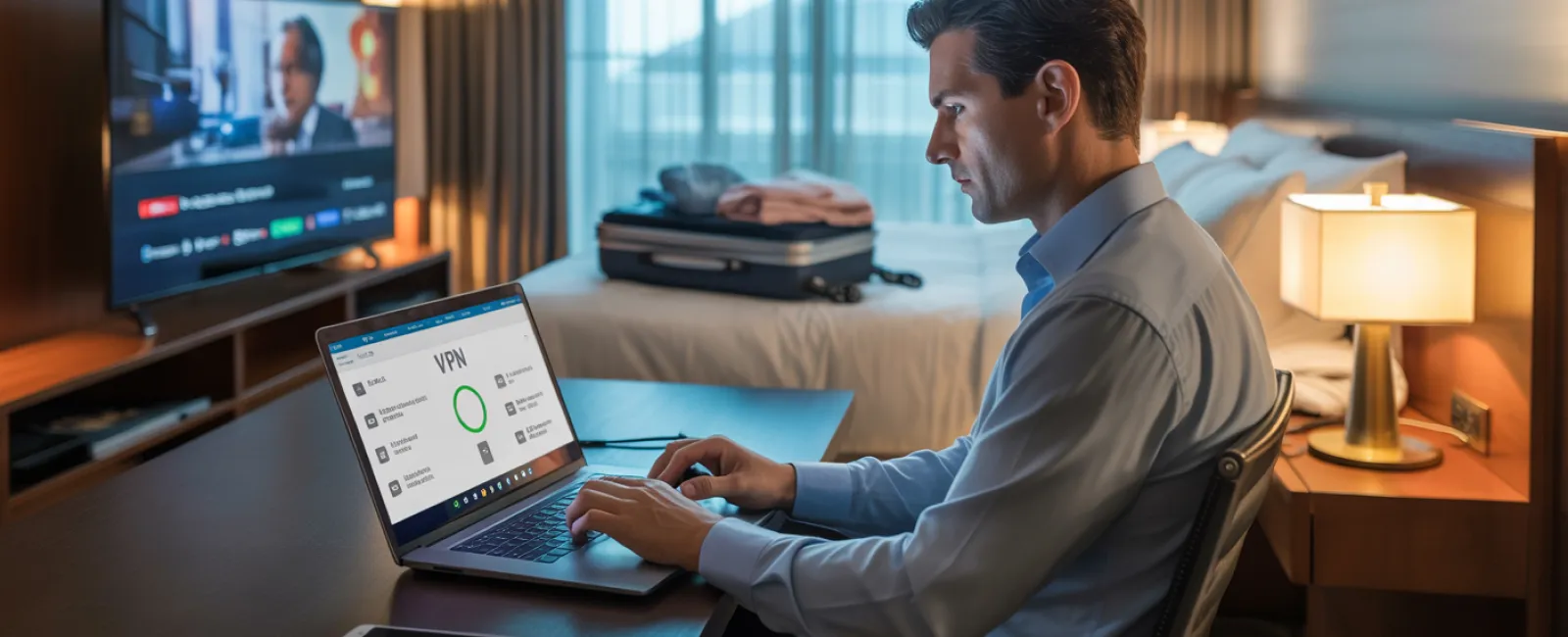
Use a VPN for work-related activities to encrypt your data and keep it private.
Switch to your phone's hotspot when handling sensitive tasks like banking or client information instead of hotel WiFi.
Separate leisure from work online: It's fine if kids use hotel WiFi for streaming, but use your mobile hotspot for anything confidential.
Protecting Your Work Laptop From Family Use
Your work laptop contains access to emails, bank accounts, client files, and critical business systems. When kids want to play games or watch videos, handing over this device can be risky.
Why it matters: Children can unknowingly download harmful content, click risky links, share passwords, or forget to log out. While none of this is intentional, it jeopardizes your security.
The best approach:
Politely but firmly, say no to kids using your work device: "This laptop is for work, but here's another device you can use." Stick to this rule.
If you must allow access:
- Set up a restricted user account specifically for them.
- Supervise their activity carefully.
- Prevent any downloads.
- Never save their passwords on your device.
- Clear browsing history once they're done.
Even better: Travel with a dedicated family device like an old tablet or non-work laptop.
Streaming on Hotel TVs? Don't Forget to Log Out
Your family loves watching Netflix in the hotel room, but logging into your account on a shared smart TV can lead to serious issues. Forgetting to log out means the next guest could access your account—and if you reuse passwords (please don't), they might exploit those elsewhere.
How to avoid this:
- Use your personal device and cast to the TV for streaming—that's safer.
- If you must log in on the TV, set a phone alarm to remind you to log out before checkout.
- Even better: download episodes or movies on your own devices beforehand and bypass the hotel TV altogether.
Never log into these accounts on hotel TVs:
- Banking apps
- Work-related systems
- Email accounts
- Social media
- Any apps with saved payment details
Lost Devices? Act Fast
Travel chaos means devices can go missing in restaurants, hotels, rental cars, or airports. If your device disappears:
Within the first hour, you should:
- Use "Find My Device" tools to locate or lock it remotely.
- Change passwords for critical accounts immediately using another device.
- Contact your IT support or managed service provider to block company system access.
- Alert affected parties if sensitive business data was stored on the device.
Make sure your devices have these BEFORE traveling:
- Remote tracking enabled.
- Strong, unique passwords.
- Automatic encryption of data.
- Capability to wipe data remotely.
Lost a family member's device? Apply these steps promptly to secure their information as well.
Rental Car Bluetooth Data Risks
Connecting your phone to a rental car's Bluetooth for music or navigation often means the vehicle stores your contacts, call history, and even message previews. When the car is returned, this sensitive data often remains accessible to the next driver.
Quick 30-second cleanup before handing back the car:
- Remove your phone from the car's Bluetooth settings.
- Clear recent GPS destinations.
- Or avoid connecting altogether by using an auxiliary cable or streaming directly from your device.
Setting Boundaries on Working Vacations
It's tempting to check work emails constantly during family trips, but juggling work and vacation time not only stresses relationships but also lowers your security awareness. Distractions may lead you to make unsafe choices like clicking bad links or joining unsecured networks.
Be realistic and intentional about work boundaries:
- Check work emails only twice a day at set times.
- Use your phone's hotspot for work rather than hotel WiFi.
- Do work in private hotel rooms, away from public areas where screens can be seen.
- Be fully present during family time, avoiding multitasking.
The smartest security move? Take real time off. Your business will survive, and you'll be sharper and more secure when you return.
Adopt a Security Mindset for Holiday Travel
Balancing work and family on the road isn't perfect. Sometimes your kids need your laptop. Sometimes an urgent email can't wait. The goal is not flawlessness—it's thoughtful risk management:
- Prepare your devices thoroughly before departure.
- Know which online activities are risky (e.g., banking on hotel WiFi) versus safer options (using mobile hotspots).
- Keep work and family data separated whenever possible.
- Have a clear plan in case of a security incident.
- Know when to say "This device isn't for that," and mean it.
Make This Holiday One to Remember for All the Right Reasons
The holidays should focus on connection and joy, not the stress of a data breach or client fallout. With some preparation and practical rules, you can protect your business without spoiling the vacation atmosphere. Your family enjoys their time, your business stays secure—everyone wins.
Need help crafting travel security plans for your team and yourself? Click here or call us at 817-589-0808 to schedule a free 30-Minute Discovery Call. We'll help you design sensible policies that keep your business safe without making travel a hassle.
After all, the best holiday memories shouldn't be about a hacked laptop.


